Syndesmosis Injuries: What They Are and How Long Recovery Takes

Updated: Jul 23
Syndesmosis injuries are among the more complex ankle injuries a person can experience, yet they are frequently misunderstood or misidentified as a routine ankle sprain. Also known as a high ankle sprain or ankle high sprain, these injuries involve the ligaments that connect the tibia and fibula above the ankle joint rather than those on the outer or inner ankle. Understanding what syndesmosis injuries are, how they differ from common ankle sprains, and what the recovery process involves can help you make informed decisions about your care.
What Is the Syndesmosis and Why Does It Matter?
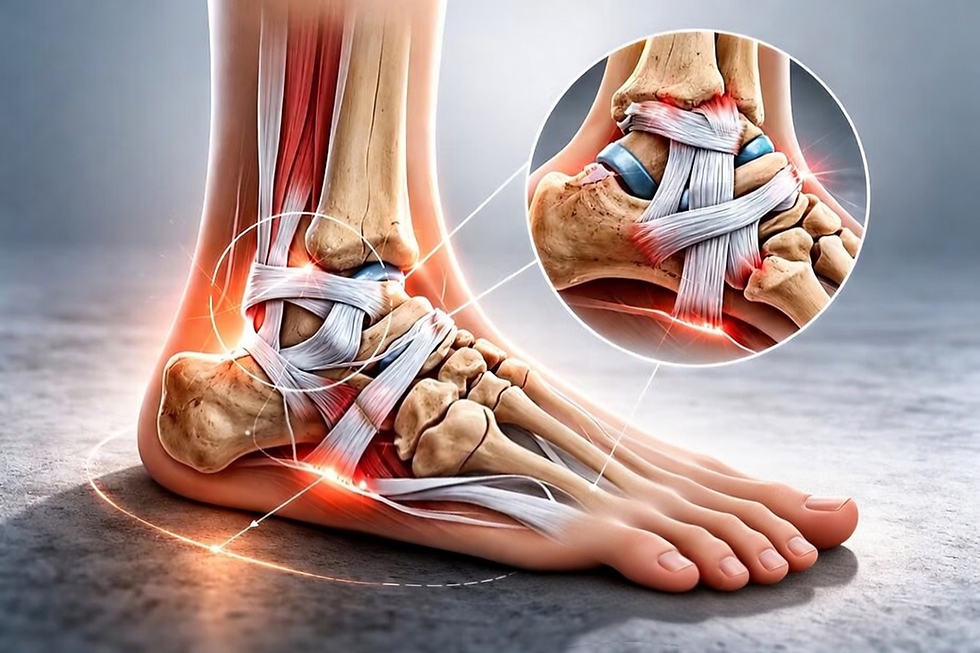
The syndesmosis is a fibrous joint made up of several ligaments that hold the lower ends of the tibia and fibula together. This structure plays a critical role in stabilising the ankle joint during weight-bearing activities such as walking, running, and jumping. Without this stability, normal ankle mechanics break down and the risk of long-term joint damage increases.
The ligaments most commonly involved in syndesmosis injuries include the anterior inferior tibiofibular ligament (AITFL), the posterior inferior tibiofibular ligament (PITFL), and the interosseous ligament. Damage to any of these structures can affect how well the ankle absorbs and distributes force, making accurate diagnosis and appropriate management essential.

How Serious Is a Syndesmosis Injury?
The severity of syndesmosis injuries exists on a spectrum. While some cases involve minor ligament stress and heal with conservative care, others involve significant structural disruption that requires surgical intervention. Research published in the National Institutes of Health journal database indicates that these injuries occur in up to 18 per cent of all ankle sprains, with higher rates seen in contact and high-impact sports (Norkus & Floyd, 2001). If you suspect a syndesmosis injury, getting it properly assessed early makes a real difference to recovery time and outcome. Physiotherapy Balmain by Sydney Allied Health has physiotherapists experienced in assessing ankle ligament injuries, who can help gauge the severity and advise on whether further medical imaging or specialist referral is warranted. From there, they can take you through a staged rehabilitation program, starting with protecting the joint and controlling swelling, progressing through restoring range of motion and strength, and finishing with sport-specific loading and balance work, so you return to activity with confidence rather than risking re-injury by rushing back too soon. If you think you may have a syndesmosis injury, book an ankle assessment with Physiotherapy Balmain to get a clear recovery plan.
Grade 1: Mild Syndesmosis Sprain
A grade 1 syndesmosis injury involves stretching or minor tearing of the syndesmotic ligaments without instability of the ankle joint. Pain is typically localised above the ankle, and weight-bearing is usually possible, though uncomfortable. This grade responds well to conservative physiotherapy management, including rest, load management, and gradual rehabilitation.
Grade 2: Partial Ligament Disruption
Grade 2 injuries involve a more significant partial tear with some degree of widening between the tibia and fibula. There may be noticeable swelling, tenderness along the syndesmosis, and difficulty bearing weight. These injuries require careful assessment to determine whether the joint remains stable. Conservative treatment may still be appropriate for stable grade 2 injuries, though close monitoring is important.
Grade 3: Complete Disruption and Instability
A grade 3 injury involves complete disruption of the syndesmotic complex, often with ankle joint instability. Surgical stabilisation is typically required to restore the normal relationship between the tibia and fibula. Without appropriate treatment, grade 3 injuries carry a risk of chronic pain, instability, and early onset arthritis in the ankle joint.

How Do I Know If I Sprained My Ankle?
Ankle sprains are common, but not all ankle injuries are the same. Understanding the difference between a standard lateral ankle sprain, which typically involves ankle injury inversion where the foot rolls outward, and a high ankle sprain is important for getting the right treatment. A lateral sprain involves the ligaments on the outer side of the ankle and is the most common type of ankle trauma. A syndesmosis injury, by contrast, usually results from a different mechanism and affects structures higher up in the ankle complex.
Signs that may indicate a syndesmosis or high ankle injury rather than a standard lateral sprain include pain located above the ankle rather than on the outer ankle bone, discomfort that is aggravated by rotating the foot outward, tenderness when the lower leg bones are squeezed together, and pain that persists or worsens with weight-bearing over time. If you are unsure about the nature of your ankle injury, a physiotherapy assessment is the most reliable first step.
Syndesmosis Injury Recovery Time: What to Expect
Syndesmosis injury recovery time varies depending on the grade of injury, whether surgery was required, and how consistently rehabilitation is followed. Compared to a standard lateral ankle sprain, high ankle injury recovery time is generally longer and requires more structured management.
Conservative Recovery
For stable grade 1 and some grade 2 injuries, a non-surgical approach is appropriate. Recovery typically involves a period of immobilisation or reduced weight-bearing, followed by a progressive physiotherapy program focused on reducing pain and swelling, restoring ankle range of motion, rebuilding strength in the surrounding musculature, and retraining balance and proprioception. For mild injuries, return to normal activity may occur within six to eight weeks. More significant sprains can require three to four months of rehabilitation.
Post-Surgical Recovery
When surgery is required to stabilise the syndesmosis, recovery is more involved. Following fixation, a period of non-weight-bearing is typically prescribed before a structured rehabilitation program begins. Overall recovery from a surgical syndesmosis injury can range from four to six months, with return to full sport or high-demand activity sometimes taking longer. Physiotherapy plays a central role throughout this recovery process, guiding the progression of load and movement to support safe healing.
How Physiotherapy Supports Syndesmosis Injury Recovery
Physiotherapy is a key component of recovery from both conservative and surgical syndesmosis injuries. A physiotherapist will assess the extent of the injury, guide safe progression through rehabilitation stages, and help you return to your normal activities with confidence. Broadly, physiotherapy management for syndesmosis injuries may address the following areas:
• Pain and swelling management in the early stages of recovery
• Restoring ankle joint range of motion and flexibility
• Strengthening the muscles that support and stabilise the ankle
• Proprioceptive and balance retraining to reduce the risk of re-injury
• Sport-specific or activity-specific training in the final stages of return to function
Physiotherapy for Syndesmosis Injuries in Balmain
If you have experienced an ankle injury and are unsure of its nature or severity, an early physiotherapy assessment can help clarify your diagnosis and set you on the right path to recovery. Balmain Physiotherapy by Sydney Allied Health Group provides evidence-based assessment and rehabilitation for syndesmosis injuries and a range of other ankle and lower limb conditions.
Whether you are managing a recent ankle high sprain, working through a longer recovery from a more significant syndesmotic injury, or returning to sport after treatment, the team at Sydney Allied Health Group can support you with an individualised approach that fits your goals and lifestyle.
Book a physiotherapy assessment at Balmain Physiotherapy by Sydney Allied Health Group and get a clear plan for your syndesmosis injury recovery.
References
Norkus, S.A., & Floyd, R.T. (2001). The Anatomy and Mechanisms of Syndesmotic Ankle Sprains. Journal of Athletic Training, 36(1), 68-73. https://pmc.ncbi.nlm.nih.gov/articles/PMC4128849/