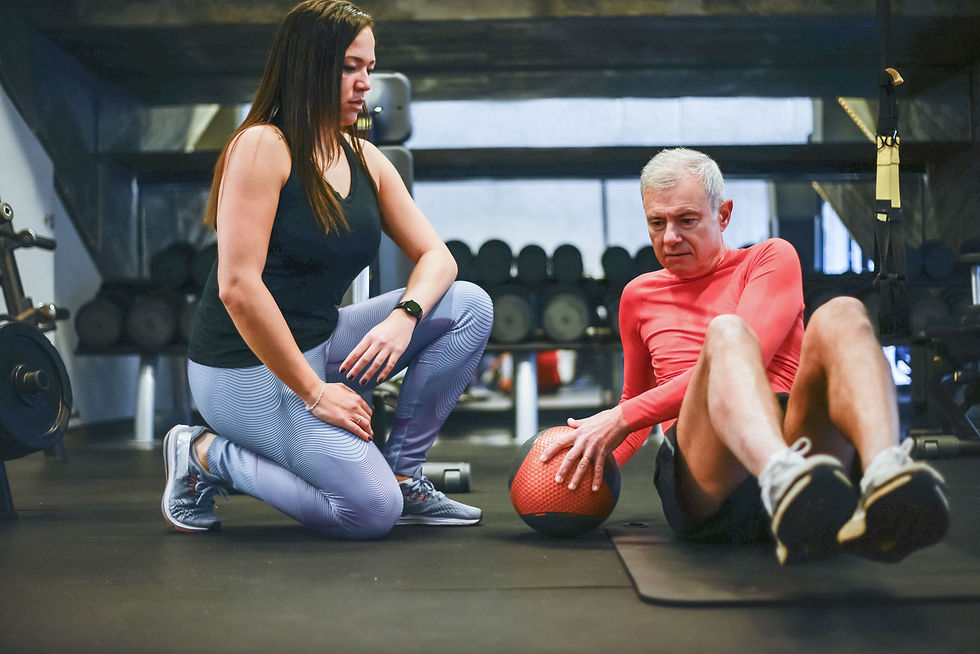
10 Minute Core Workout For Seniors: Safe & Effective EP-Approved Approach for Seniors

Updated: Aug 13

Introduction
A strong core is fundamental to maintaining independence, balance, and functional fitness throughout older age. The 10 minute core workout for seniors represents an efficient and practical approach to building core strength without requiring lengthy training sessions or specialised equipment. Core strength directly impacts posture, stability during daily activities, and the ability to prevent falls, which remain a significant concern for older adults.
Many seniors avoid core training due to concerns about safety, complexity, or physical limitations. However, evidence-based core exercises designed specifically for older adults can be performed safely when guided by proper technique and appropriate progressions. This article explores practical, evidence-supported strategies for developing a 10 minute core workout for seniors that prioritises safety while delivering meaningful strength gains.
For older adults who are unsure where to begin, professional guidance can help ensure core exercises are appropriate for their current abilities, mobility, and functional goals. At Balmain Physiotherapy by Sydney Allied Health Group, physiotherapy support can form part of a broader approach to maintaining strength, balance, and confidence with movement. This can be particularly helpful for seniors who have existing movement concerns or would benefit from having their exercise approach assessed and adjusted appropriately.
Understanding Core Strength in Older Adults
Why Core Strength Matters for Seniors
The core comprises deep and superficial muscles that stabilise the spine, pelvis, and trunk. These muscles support nearly every movement, from walking and climbing stairs to reaching overhead and maintaining posture. As people age, muscle mass naturally declines, a process called sarcopenia. This loss accelerates without regular resistance training, affecting stability and functional capacity.
Core weakness in older adults contributes to postural changes, reduced balance, increased fall risk, and chronic back pain. Conversely, targeted core training improves spinal stability, reduces injury risk, and enhances everyday function. Research demonstrates that progressive resistance training, including core-focused work, effectively counters age-related muscle loss when performed consistently.
Core Exercises for Older Adults: Evidence-Based Foundations
What Makes Core Training Safe for Seniors
Effective core exercises for older adults share key characteristics. They progress gradually in difficulty, maintain neutral spine alignment, avoid excessive twisting or hyperextension, and allow modification for individual capacity. Safety depends on proper breathing, controlled movements, and gradual progression rather than intensity or speed.
Basic core exercises for seniors typically begin with isometric holds, where muscles contract without joint movement. These foundational approaches build muscular endurance before advancing to dynamic movements. Proper assessment of individual mobility, strength, and medical history ensures exercise selection aligns with personal capacity.
The Role of Exercise Physiology in Senior Core Training
An exercise physiologist provides evidence-based assessment and program design tailored to individual health status, limitations, and goals. This professional guidance ensures seniors receive appropriate exercise prescription, reducing injury risk while maximising strength gains. For those in Balmain seeking personalised core training programs, Balmain Physiotherapy by Sydney Allied Health Group offers exercise physiology services designed specifically for older adults.
Designing an Effective 10 Minute Core Workout
Key Principles for Senior Core Training
An effective 10 minute core workout for seniors incorporates specific principles. Warm-up periods prepare muscles and joints for work. Exercises target deep core stabilisers, not just superficial abdominal muscles. Progressions allow gradual difficulty increases. Rest periods allow recovery between sets. Cool-down segments prevent dizziness and allow breathing normalisation.
Frequency matters significantly. Performing core exercises 2-3 times weekly allows adequate recovery while building consistent strength. This frequency aligns with evidence showing progressive resistance training produces meaningful strength gains in older adults across 8-12 week periods.
Best Core Exercises for Older Adults
Foundational Exercises
Pelvic floor engagement forms the starting point for many core routines. This involves gentle contraction of deep pelvic muscles that stabilise the pelvis and support bladder function. Dead bugs involve lying on the back with arms and legs extended, then slowly lowering opposite arm and leg while maintaining spinal contact with the floor. This develops coordination while protecting the lower back.
Quadruped exercises, performed on hands and knees, allow isolated core work with excellent spinal alignment control. Glute bridges, performed lying on the back with knees bent and feet flat, activate posterior chain muscles while improving hip stability and lower back function. These foundational movements prepare the body for more challenging progressions.
Intermediate Progressions
Plank variations develop static core endurance. Wall-supported planks or elevated planks (hands on a bench rather than floor) reduce body weight load while building strength. Birddog exercises, performed from quadruped position with opposite arm and leg extension, develop dynamic stability and coordination.
Bird dogs, performed from quadruped position, involve extending opposite arm and leg while maintaining spinal stability. This movement challenges balance and coordination while building strength. Pallof presses, performed with a resistance band anchored at chest height, develop rotational stability without excessive spinal rotation.
Core Exercises for Seniors with Back Pain
Seniors experiencing back pain require careful exercise selection. Exercises should avoid excessive forward flexion, rotation, or extension. Core activation during functional movements like sit-to-stand practice develops practical strength. Bridges and glute activations redistribute load away from painful spine segments. Gentle rotation exercises with proper breathing patterns maintain mobility without aggravating symptoms.
Structuring Your 10 Minute Core Routine
Sample Workout Structure
A practical 10 minute core workout for seniors follows this framework: 1-2 minutes warm-up, 7-8 minutes core work, 1 minute cool-down.
Warm-up might include seated marching, arm circles, and gentle spinal rotation. Core work then cycles through 4-5 exercises performed for 45-60 seconds each with 15-30 second transitions. A cool-down incorporates gentle stretching and breathing normalisation.
Exercise selection rotates weekly to address different core regions. One session emphasizes anterior core and hip flexors. Another focuses on posterior chain and glute strength. A third develops rotational stability and lateral support.
Progression and Modification Strategies
All movements allow modification. Exercises performed on knees rather than toes reduce body weight load. Holding a chair, wall, or partner's hand provides balance support. Exercise duration decreases if fatigue compromises form. Conversely, elevated surfaces increase difficulty when strength improves.
Progression occurs gradually. Once an exercise feels controlled for the prescribed duration, duration increases by 10-15 seconds, or difficulty increases through reduced support or greater range of motion. This systematic approach builds strength safely over weeks and months.
Answering Your Core Questions
What is the Best Core Exercise for Seniors?
No single best exercise exists because optimal choices depend on individual capacity, goals, and limitations. However, quadruped exercises and modified planks rank among the most effective foundational core exercises for older adults. These movements engage deep core stabilisers, maintain safe spinal alignment, and allow easy modification. Glute bridges deserve mention as well, developing posterior chain strength critical for posture and daily function.
An assessment by an exercise physiologist determines which exercises suit individual needs. For Balmain residents, Balmain Physiotherapy by Sydney Allied Health Group can provide personalised assessment identifying the most appropriate starting exercises and progression pathways.
What are the Best 10 Minute Core Workouts?
The best 10 minute core workout for seniors prioritises consistency over perfection. A routine incorporating 4-5 exercises, each performed for 45-60 seconds with adequate recovery, provides effective stimulus within realistic time constraints. Rotating between anterior core focus, posterior chain development, and rotational stability ensures balanced strength development.
Effective routines include warm-up periods, progress gradually, use proper form throughout, and allow modifications. The best routine for any individual is one they perform consistently, adapted appropriately to their capacity, and progressed systematically as strength improves.
Safety Considerations
When to Seek Professional Guidance
Seniors with existing back pain, balance difficulties, recent surgery, or multiple chronic conditions should seek assessment before beginning core training. Those taking certain medications affecting balance, coordination, or bone density benefit from professional guidance.
Proper exercise prescription from qualified professionals ensures safety and effectiveness. Symptoms during or after exercise including sharp pain, dizziness, or excessive fatigue warrant professional evaluation.
Conclusion
A 10 minute core workout for seniors provides practical, time-efficient core strengthening when designed with proper progression, appropriate exercise selection, and consistent attention to safe form. Foundational movements like pelvic floor engagement, dead bugs, quadruped work, and glute bridges build the stability needed to progress toward planks, bird dogs, and Pall of presses, while modifications keep every exercise accessible regardless of current strength or balance ability.
The evidence is clear that regular, moderate core training reduces fall risk, eases back pain, and preserves the functional independence that matters most in daily life. Because individual needs vary so widely with age, medical history, and current fitness, working with a qualified exercise physiologist remains the safest way to translate these general principles into a program suited to your specific circumstances. Whether performed as a standalone routine or alongside broader strength training, a consistent 10 minute core workout offers older adults a realistic, evidence-backed path toward a stronger, more stable, and more confident body.