Best Core Exercises For Seniors: What the Research Says & How an EP Can Help


Why Core Strength Matters for Seniors
Your core is much more than abdominal muscles. It encompasses the deep stabiliser muscles in your abdomen, back, pelvis, and hips that work together to support your spine and maintain balance. For older adults, core strength becomes increasingly important for everyday activities like climbing stairs, carrying groceries, and preventing falls.
Research demonstrates that progressive strength training, including core work, produces meaningful improvements in functional capacity and independence among older populations. A decline in core stability can lead to poor posture, reduced mobility, and an increased risk of falls. By focusing on simple core exercises for seniors, you can maintain the strength needed for independent living and quality of life.
For seniors who are unsure which exercises are appropriate for their current level of strength and mobility, guidance from a physiotherapist can provide a useful starting point. Balmain Physiotherapy by Sydney Allied Health Group takes a practical approach to supporting older adults with movement, strength, balance, and functional independence. Where appropriate, physiotherapy can help identify areas that may need attention and guide exercise choices that are suited to an individual’s abilities and everyday needs.
Understanding Core Function in Ageing
As we age, muscle mass naturally decreases through a process called sarcopenia. This loss of muscle tissue affects the core muscles that stabilise your spine and support movement. The good news is that targeted strength training can counteract this decline at any age.
The core functions as a stabiliser during movement, helping you maintain balance while walking, reaching, or turning. When core muscles weaken, your body relies more on larger muscles and compensatory patterns, which can lead to pain and dysfunction. Gentle core exercises for seniors work by activating these deep stabiliser muscles without excessive strain.
What Are the Big 3 Exercises for the Core?
The three foundational core movements provide maximum benefit with minimal complexity. These exercises form the basis of effective core training programs for older adults.
1. Planks and Modified Variations
Planks are isometric exercises that engage multiple core muscles simultaneously. For seniors, modified versions like wall planks or knee planks reduce intensity while maintaining effectiveness. These exercises build endurance in the deep abdominal muscles and lower back stabilisers.
2. Bird Dogs
Bird dogs involve extending opposite arm and leg while maintaining a stable spine. This movement pattern mimics real-world balance challenges and strengthens the core while improving coordination. The exercise naturally reinforces proper posture and engages stabiliser muscles effectively.
3. Bridges
Bridges activate the gluteal muscles, lower back, and abdominal muscles in one movement. This exercise strengthens the posterior chain, which is essential for standing posture and movement quality. Bridges are particularly valuable for seniors because they address hip and lower back strength simultaneously.
Best Core Strengthening Exercise for Seniors
When considering what is the best core strengthening exercise for seniors, research and practical experience point toward bridges as the most versatile option. Bridges provide excellent activation of multiple muscle groups while being relatively safe and adaptable.
Bridges work the entire posterior chain, including muscles that become underactive from prolonged sitting. They require minimal equipment and can be performed on a mat or carpet. Progressions are straightforward: single-leg bridges increase difficulty without changing the fundamental movement pattern.
The effectiveness of this exercise lies in its functional relevance. Hip extension strength directly supports standing, walking, and stair climbing. The exercise also activates core stabiliser muscles that support spinal health.
Simple Core Exercises for Seniors at Home
Printable core exercises for seniors with pictures can serve as helpful reminders when performing movements at home. The following represent safe, effective options:
Dead Bugs
Lying on your back, lift alternating arms and legs in a controlled manner. This exercise strengthens deep abdominal muscles while maintaining spinal stability. The supine position reduces balance demands, making it suitable for all fitness levels.
Pelvic Tilts
Lying on your back with knees bent, gently tilt your pelvis to flatten your lower back against the floor. This introductory movement teaches core engagement and addresses lower back awareness. Pelvic tilts prepare muscles for more challenging exercises.
Seated Marching
Sitting upright in a sturdy chair, lift your knees alternately in a marching motion. This exercise engages core muscles while maintaining a safe, supported position. Seated marching translates directly to functional movements and requires no special equipment.
Gentle Core Exercises for Seniors With Limited Mobility
Individuals with joint pain or mobility restrictions benefit from gentle core exercises for seniors that respect physical limitations while building strength.
Supine Abdominal Bracing
Lying flat, gently contract your abdominal muscles and hold. This fundamental exercise teaches core awareness without movement. Abdominal bracing forms the foundation for all other core work.
Side-Lying Leg Lifts
From a side-lying position, lift your top leg slowly. This movement strengthens hip abductors and oblique muscles without demanding significant balance or mobility. Side-lying positions offer stability while working muscles effectively.
Wall Push-Ups
Standing at arm's length from a wall, perform gentle push-ups against the wall surface. This exercise engages core stabilisers while building upper body strength. Wall push-ups are fully adjustable by changing your distance from the wall.
Easy Ab Exercises and Stomach Exercises for Seniors
Easy stomach exercises for seniors don't require complex movements or special skills.
Progressive overload through gentle repetition builds strength effectively.
Sustained posture holds, like sitting upright against a wall, engage core muscles throughout daily activities. Breathing exercises combined with gentle abdominal awareness develop mind-muscle connection. Simple activities like standing on one leg while holding onto a counter strengthen balance and core stability simultaneously.
How an Exercise Physiologist Supports Core Training
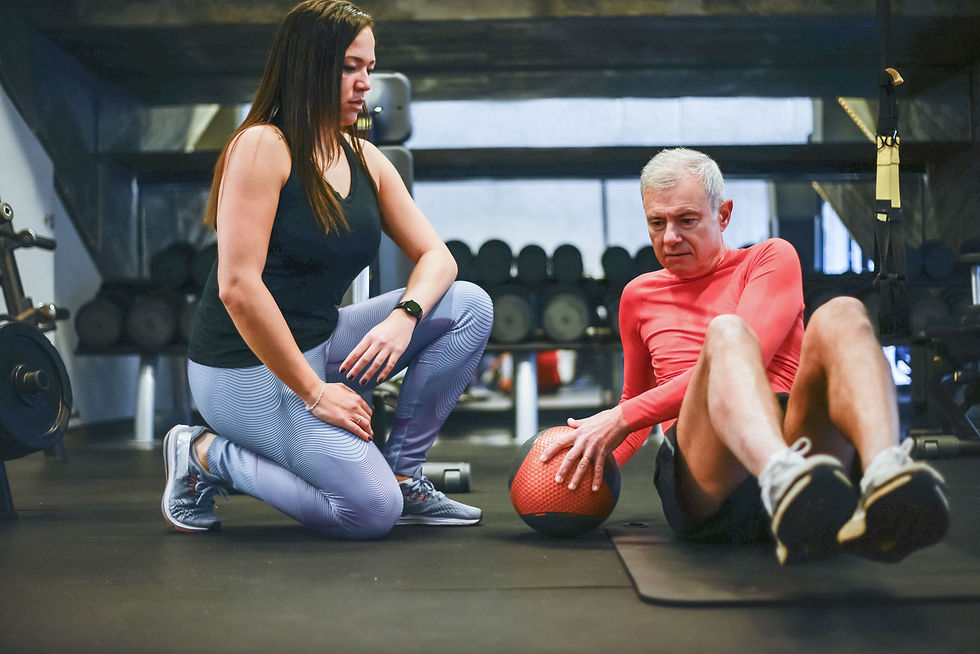
An exercise physiologist conducts thorough assessments to identify your baseline fitness level and any movement limitations. This individualised approach ensures that your core program matches your current capacity and goals.
At Balmain Physiotherapy by Sydney Allied Health Group, exercise physiologists design progressive programs that challenge your muscles safely while building confidence. They teach correct movement patterns, preventing compensatory habits that develop when exercises are performed incorrectly.
Regular sessions provide accountability and form correction, particularly important for older adults learning new movements. Your exercise physiologist monitors your progress and adjusts difficulty as you improve, maintaining appropriate challenge levels throughout your training.
Creating a Sustainable Core Training Program
Consistency matters more than intensity when building long-term strength. Starting with two to three sessions weekly allows adequate recovery while building strength progressively.
Movement quality always takes priority over quantity. Performing five correct repetitions produces better results than ten poorly executed ones. Rest days between sessions allow muscles to recover and adapt.
Combining core exercises with general strength training produces superior results compared to core work alone. Leg exercises, upper body movements, and core training together create balanced strength development.
Safety Considerations and Progress Tracking
Before beginning any new exercise program, particularly if you have existing health conditions, medical clearance is advisable. Discuss your exercise plans with your general practitioner or allied health professional.
Track your progress by noting how many repetitions you can perform with good form, rather than focusing solely on difficulty. Improvements in daily activities, such as easier stair climbing or better balance, indicate meaningful progress.
Avoid exercises that cause sharp pain, though some muscle fatigue and mild discomfort is normal when exercising. Distinguish between productive muscle work and pain indicating potential injury.
The Bottom Line on Best Core Exercises for Seniors
Building core strength remains achievable and valuable at any age. Research supports progressive strength training as an effective strategy for maintaining independence and functional capacity in older adults. The best core exercises for seniors combine simplicity, safety, and functional relevance.
Starting with foundational movements like bridges, planks, and bird dogs provides excellent core activation. Progression comes through increased repetitions, longer holds, or single-leg variations rather than complex new exercises.
Whether you're performing printable core exercises for seniors at home or seeking professional guidance, consistency and proper form drive results. If you're in the Balmain area and would like personalised guidance on core training, our team at Sydney Allied Health Group can assess your needs and develop an appropriate program.
Reference
Kemmler W, Stengel S. (2011). The Intensity and Effects of Strength Training in the Elderly. Deutsches Ärzteblatt International, 108(21), 359-364. https://pmc.ncbi.nlm.nih.