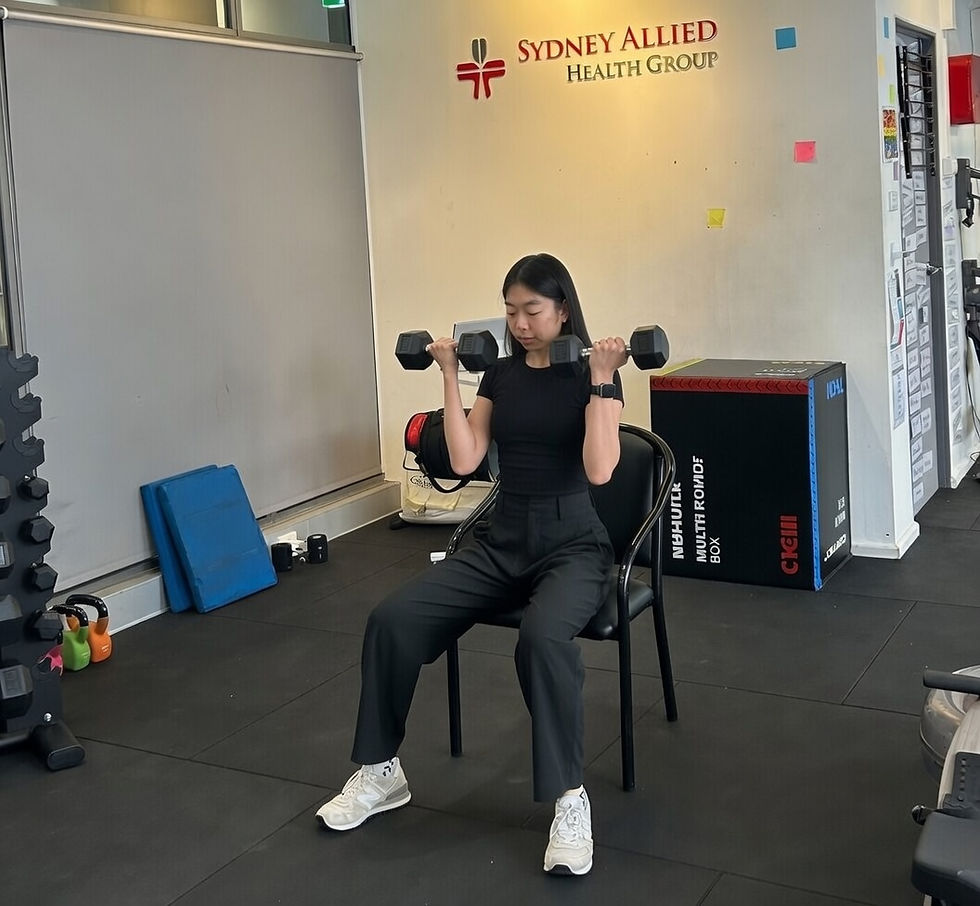
Resistance Training at Home: Effective Workouts Without a Gym
- Sydney Allied
- May 6
- 5 min read

Resistance training at home is a practical, evidence-based approach to building strength, improving fitness, and supporting long-term health without the need for a gym membership. Whether you are working towards a specific health goal, recovering from a period of inactivity, or simply looking for a sustainable way to exercise at home, structured home strength training workouts can be highly effective when approached correctly. This article outlines the key principles behind resistance training exercises at home, addresses common questions, and explains when professional guidance from an exercise physiologist can make a meaningful difference to your outcomes.
What Is Resistance Training?
Resistance training is any form of exercise that causes muscles to contract against an external force or resistance. This force can come from free weights, resistance bands, gym machines, or even your own bodyweight. The goal is to progressively challenge your muscles so they adapt by becoming stronger and more functional over time.
Contrary to common belief, you do not need specialised equipment or a gym environment to achieve meaningful results. A well-designed body weight training program can effectively stimulate muscle development, improve cardiovascular markers, and support bone health when performed consistently and with appropriate intensity.

Is It Possible to Do Resistance Training at Home?
Yes, resistance training at home is not only possible but well-supported by research. The key factors that determine effectiveness are progressive overload, consistency, and exercise selection rather than the location or equipment used. A thoughtfully structured home strength training program can produce comparable results to gym-based training, provided the principles of progressive resistance are applied. That said, working with a qualified exercise therapist can significantly improve outcomes. Professional guidance helps ensure proper technique, tailored progression, and programs that align with your individual goals, whether that’s building strength, managing pain, or improving mobility. The risk of injury is also reduced when exercises are prescribed and monitored correctly.
At Sydney Allied Health Group, exercise therapists design personalised resistance training programs that can be performed safely at home while still delivering measurable results. With expert support, you’re not just exercising, you’re following a structured plan built specifically for your body and needs.
👉 Book your exercise physiology session today: Book your appointment
Using Your Bodyweight as Resistance
Body weight training exercises such as squats, lunges, push-ups, step-ups, and hip hinges recruit major muscle groups across the lower and upper body. These movements can be progressively modified by adjusting tempo, range of motion, or the addition of a resistance band to increase demand on the muscles over time.
Resistance Bands and Minimal Equipment
Resistance bands are a cost-effective and versatile tool for home strength training exercises. They allow for a wide range of movement patterns and can be used to replicate many of the exercises commonly performed in a gym setting. Bands are particularly useful for targeting the upper body, hips, and stabilising muscles that may be harder to engage with bodyweight alone.
Structuring Your Home Workouts
Effective resistance training exercises at home follow a structure similar to any evidence-based program. Aim to train major muscle groups two to three times per week, allowing adequate recovery between sessions. Each session should include a warm-up, a selection of compound and targeted exercises, and a cool-down. Progressing gradually over time, whether by increasing repetitions, sets, or resistance, is essential for continued adaptation.
Can Strength Training Improve Bone Density?
Research indicates that resistance training can play a meaningful role in maintaining and improving bone density, particularly in postmenopausal women and older adults. According to Mayer et al. (2011), published in the Deutsches Arzteblatt International, physical activity through strength training can lead to an increase in, or a reduction in the loss of, bone density. The study highlights that adequate stimulation of osteogenesis requires loading at appropriate intensities, and that progressive resistance training may support bone health over weeks to months of consistent effort.
These findings are particularly relevant for individuals concerned about osteopenia or osteoporosis. While resistance training alone is not a treatment for bone conditions, incorporating structured strength training workouts into your routine as a preventative or complementary strategy is supported by current evidence. Anyone with a confirmed bone condition or elevated fracture risk should consult an accredited exercise physiologist before starting a program.
Benefits of Home Strength Training Beyond Muscle Strength
The benefits of regular resistance training extend well beyond building muscle. Evidence from multiple reviews suggests that consistent strength training workouts positively influence a range of health markers. Some of the key benefits associated with regular resistance training at home include:
• Improved metabolic function and blood glucose regulation
• Reduced risk factors associated with cardiovascular conditions
• Better balance, coordination, and fall prevention, particularly in older adults
• Enhanced joint stability and reduced musculoskeletal discomfort
• Improved mood, energy levels, and overall quality of life
These outcomes are achievable through consistent exercise at home when the program is designed to match your individual capacity and health status.
Getting Started with Resistance Training at Home Safely
Starting a home strength training program without professional input is appropriate for many healthy adults, particularly those with prior exercise experience. However, individuals with existing health conditions, a history of injury, or no prior experience with structured exercise would benefit significantly from an initial assessment with a qualified exercise physiologist before beginning.
Key Principles to Keep in Mind
Regardless of your starting point, the following principles apply to effective and safe resistance training at home:
• Start at a manageable intensity and progress gradually over time
• Prioritise movement quality and control before increasing load or speed
• Allow for recovery between training sessions targeting the same muscle groups
• Stay consistent, as adaptation occurs over weeks and months, not days
• Listen to your body and distinguish between productive discomfort and pain that warrants attention
Exercise Physiology Support in Balmain
If you are looking for professional guidance to build an effective and safe body weight training program or home strength training plan, the exercise physiologists at Balmain Physiotherapy by Sydney Allied Health Group are available to help. They can assess your current fitness, identify any health considerations, and design a program tailored to your specific goals and circumstances.
Whether you are new to exercise at home or looking to refine an existing routine, working with a qualified exercise physiologist ensures your program is evidence-based and aligned with your long-term health objectives.
📅 Book an exercise physiology session with Sydney Allied Health Group in Balmain and receive a personalised home strength training plan designed around your needs.
References
Mayer, F., Scharhag-Rosenberger, F., Carlsohn, A., Cassel, M., Muller, S., & Scharhag, J. (2011). The Intensity and Effects of Strength Training in the Elderly. Deutsches Arzteblatt International, 108(21), 359-364. https://pmc.ncbi.nlm.nih.gov/articles/PMC3117172/