

Balance Exercises for Seniors: An Exercise Physiologist's Complete Guide

Staying steady on your feet becomes more important with every passing year. For older adults, a decline in balance is one of the leading contributors to falls, reduced mobility, and loss of independence. The good news is that balance exercises for seniors are highly effective, evidence-supported, and accessible to people of all fitness levels. Whether you are just starting out or looking to build on an existing routine, structured balance training can make a meaningful difference to how you move and how confidently you go about your daily life.
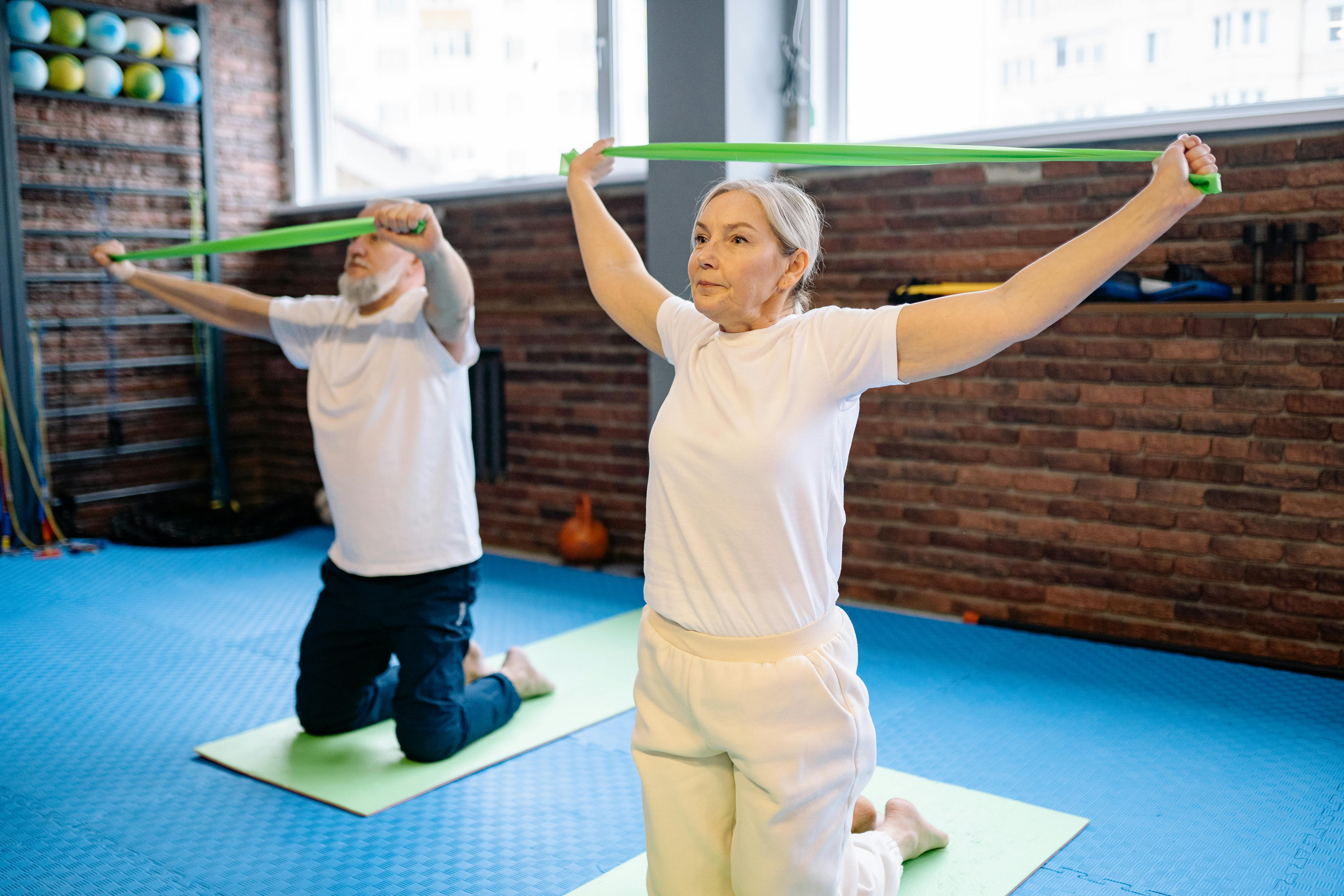
Why Balance Declines With Age
Balance is not controlled by a single system in the body. It relies on the coordination of your muscles, joints, inner ear, and vision working together in real time. As we age, each of these systems can gradually become less efficient. Muscle mass decreases, reaction times slow, and sensory input from the feet and legs becomes less precise. The result is that tasks which once required no conscious thought, such as stepping off a kerb or walking on an uneven path, can become noticeably more challenging.
The Centers for Disease Control and Prevention (CDC) recommends that adults aged 65 and older incorporate balance activities into their weekly routine alongside aerobic and muscle-strengthening exercise. This multicomponent approach reflects a growing body of evidence showing that targeted balance training, combined with strength work, delivers the best outcomes for fall prevention and functional independence (CDC, 2025).
What Is the Best Exercise for Seniors to Improve Balance?
There is no single exercise that covers everything, but research consistently points to a combination of lower-limb strengthening, postural control work, and dynamic movement as the most effective approach to balance training for seniors. The following types of exercise are widely used by exercise physiologists when designing balance programs for older adults.
Single-Leg Standing
Standing on one leg is one of the most direct ways to challenge the balance system. It places demand on the ankle, knee, and hip stabilisers while also engaging the core. For those just beginning, this can be practised near a bench or wall for added safety. Progressing to eyes-closed variations increases the challenge to the vestibular and proprioceptive systems over time.
Heel-to-Toe Walking
Also known as tandem walking, heel-to-toe walking requires the walker to place one foot directly in front of the other along a straight line. This exercise targets dynamic balance, the ability to stay stable while in motion, and is a standard component in many fall prevention programs. It can be performed along a hallway or using a line on the floor as a guide.
Tai Chi
Tai chi is a low-impact movement practice with a strong evidence base for improving balance in older adults. Its slow, controlled sequences engage multiple muscle groups simultaneously while requiring sustained attention and body awareness. Research cited in CDC fall prevention resources highlights tai chi as one of the most consistently effective structured programs for reducing fall risk in community-dwelling older adults.
Chair-Based Strengthening
Exercises performed with the support of a sturdy chair, such as seated leg raises, sit-to-stand repetitions, and standing calf raises, build the lower limb strength that underpins good balance. The sit-to-stand movement in particular mirrors a fundamental daily activity and is an excellent measure of functional leg strength. Building capacity here translates directly to safer movement throughout the day.
What Exercises for a 70 Year Female to Assist Balance?
For a woman in her seventies, a well-rounded balance program takes into account factors such as bone density, joint health, and any existing musculoskeletal conditions. The focus should be on progressive exercises that build strength and stability without placing excessive load on the joints. The following activities are commonly recommended by exercise physiologists for women in this age group.
Side leg raises while holding a chair improve hip abductor strength, which plays a key role in lateral stability during walking. Calf raises strengthen the lower leg and improve ankle proprioception. Backward walking, either along a corridor or on a treadmill at very low speed with supervision, challenges the postural control system in a different plane of movement. Yoga-based postures that involve balance, such as tree pose with appropriate modifications, are also beneficial and can be adapted for varying ability levels. As with any exercise program, gradual progression and consistency matter more than intensity.
How Balance Training for Seniors Should Be Structured
The CDC recommends that balance activities be incorporated into an older adult's weekly physical activity plan alongside at least 150 minutes of moderate-intensity aerobic exercise and two or more days of muscle-strengthening activity. Balance training does not need to occupy large blocks of time. Even short, consistent sessions several times per week can produce meaningful improvements in stability and confidence.
Progression and Safety
The most effective balance programs begin at a level appropriate to the individual's current ability and progress gradually. Starting with supported exercises and moving toward unsupported, then dynamic, variations allows the nervous system to adapt safely. Exercising in a clear space near a stable surface such as a bench or wall is always advisable, particularly when trying a new movement for the first time.
The Role of Strength in Balance
It is difficult to separate balance training from strength training in older adults. Weakness in the hips, thighs, and ankles directly compromises the body's ability to self-correct during a stumble or unexpected shift in weight. An exercise physiologist will typically address both areas within the same program, using resistance exercises to build a foundation that makes balance activities more effective and sustainable.
Balance Activities for Seniors: What to Include in a Weekly Routine
A practical weekly balance program for older adults does not need to be complicated. Consider incorporating the following types of balance workouts for seniors across the week:
Single-leg standing: 30 to 60 seconds per leg, near a wall or chair
Heel-to-toe walking: 10 to 20 steps, repeated two to three times
Sit-to-stand repetitions: 8 to 12 per set from a firm chair
Calf raises: 10 to 15 repetitions while holding a stable surface
Tai chi or group balance class: one to two sessions per week
Side leg raises or hip abduction exercises: 10 to 15 repetitions per side
These balance activities for seniors can be adapted based on individual ability, health status, and any guidance received from a qualified exercise physiologist or physiotherapist. If you are managing a chronic health condition, it is advisable to seek a professional assessment before starting a new program.
Exercise Physiology for Balance Training in Balmain
At Balmain Physiotherapy by Sydney Allied Health Group, our exercise physiologists work with older adults to design personalised balance and strengthening programs that are grounded in evidence and tailored to individual goals. Whether you are looking to reduce your risk of falls, improve your confidence on your feet, or maintain your independence as you age, we can help you build a program that fits your life.
Balance exercises for older adults are most effective when they are appropriately dosed and progressed over time. A qualified exercise physiologist can assess your current balance and strength levels, identify areas that need attention, and guide you through a program that develops safely and consistently.


