

Fall Prevention Exercise Program for the Elderly

Falls are one of the most common and serious health concerns facing older adults. Research consistently shows that around one in three adults aged 65 and over will experience at least one fall each year, with many resulting in injury, reduced independence, and a significant decline in quality of life. The good news is that falls are not an inevitable part of ageing. A structured fall prevention exercise program for the elderly can make a meaningful difference, and this is where exercise physiology plays an important role in supporting long-term safety and wellbeing. If you’re concerned about your risk of falling, you can book a fall prevention assessment to receive a personalised program designed for your needs.
Why Fall Prevention Matters for Older Adults
As the body ages, muscle strength, coordination, and reaction time naturally decline. These changes affect balance and stability, making older adults more vulnerable to trips and slips that a younger person might easily recover from. The consequences of a fall can be far-reaching, from fractures and hospitalisation to a lasting fear of falling that leads to reduced activity and further physical decline.
According to data reviewed in the Journal of Multidisciplinary Healthcare, approximately one-third of community-dwelling older adults experience at least one fall per year, with 10 to 15 per cent of these resulting in serious injuries such as fractures and head trauma (An et al., 2025). Beyond the physical impact, falls place a significant burden on healthcare systems and can reduce an older person's confidence and independence. Proactive exercise-based prevention is one of the most effective tools available.
What Are the Exercises for Falls Prevention for the Elderly?
A comprehensive fall prevention exercise program for the elderly typically targets several key physical areas: balance, leg strength, coordination, and gait stability. Evidence supports a combination of exercise types rather than a single approach, and the most effective programs are tailored to the individual's current fitness level, health status, and risk factors.
Balance Exercises for Seniors
Good balance exercises for seniors focus on improving the body's ability to maintain a stable position during both static and dynamic movements. Standing balance exercises for seniors, such as single-leg stands, heel-to-toe walking, and weight shifting, are commonly incorporated into fall prevention programs. These can be performed at varying difficulty levels and are often recommended as simple balance exercises for seniors who are beginning a program. Even short sessions, such as 5 minute balance exercises for seniors completed consistently throughout the day, can contribute to meaningful improvements over time.
Balance and Leg Strengthening Exercises for Seniors
Leg strength is closely linked to fall risk. Weakness in the hips, thighs, and lower legs makes it harder to recover from a stumble and reduces overall stability during everyday movement. Balance and leg strengthening exercises for seniors often include seated or supported movements that target the major muscle groups of the lower limb, progressively building load and challenge as strength improves. These exercises are generally safe when supervised and adapted appropriately to the individual.
Tai Chi and Functional Movement
Tai Chi is among the most widely studied forms of exercise for fall prevention in older adults. Its slow, controlled movements support balance, coordination, and body awareness, all of which contribute to fall risk reduction. Functional movement training, which mirrors real-life tasks such as sitting to standing, stepping over objects, or reaching for items, is another effective component of exercises to prevent falls in seniors. These movements prepare the body for the demands of daily life and are particularly relevant for community-dwelling older adults.
What Are the 5 P's of Falls Prevention?
The 5 P's of falls prevention is a clinical framework used to guide a comprehensive approach to reducing fall risk in older adults. While different organisations may phrase these slightly differently, the core principles remain consistent across allied health and aged care practice.
The first P is People, referring to identifying individuals who are at increased risk of falling based on their age, health conditions, medication use, and physical function. The second P is Places, which considers the physical environment and the role that home hazards, poor lighting, and uneven surfaces play in increasing fall risk. The third P is Practices, encompassing the clinical and exercise-based strategies used to reduce risk, including structured fall prevention programs, medication reviews, and vision assessments. The fourth P is Products, such as mobility aids, footwear, and assistive devices that support safe movement. The fifth P is Policy, reflecting the broader systems, guidelines, and funding structures that support consistent and evidence-based fall prevention across healthcare settings. Together, these five areas form a multifactorial approach that recognises falls as a complex issue requiring more than exercise alone.
The Role of an Exercise Physiologist in Fall Prevention
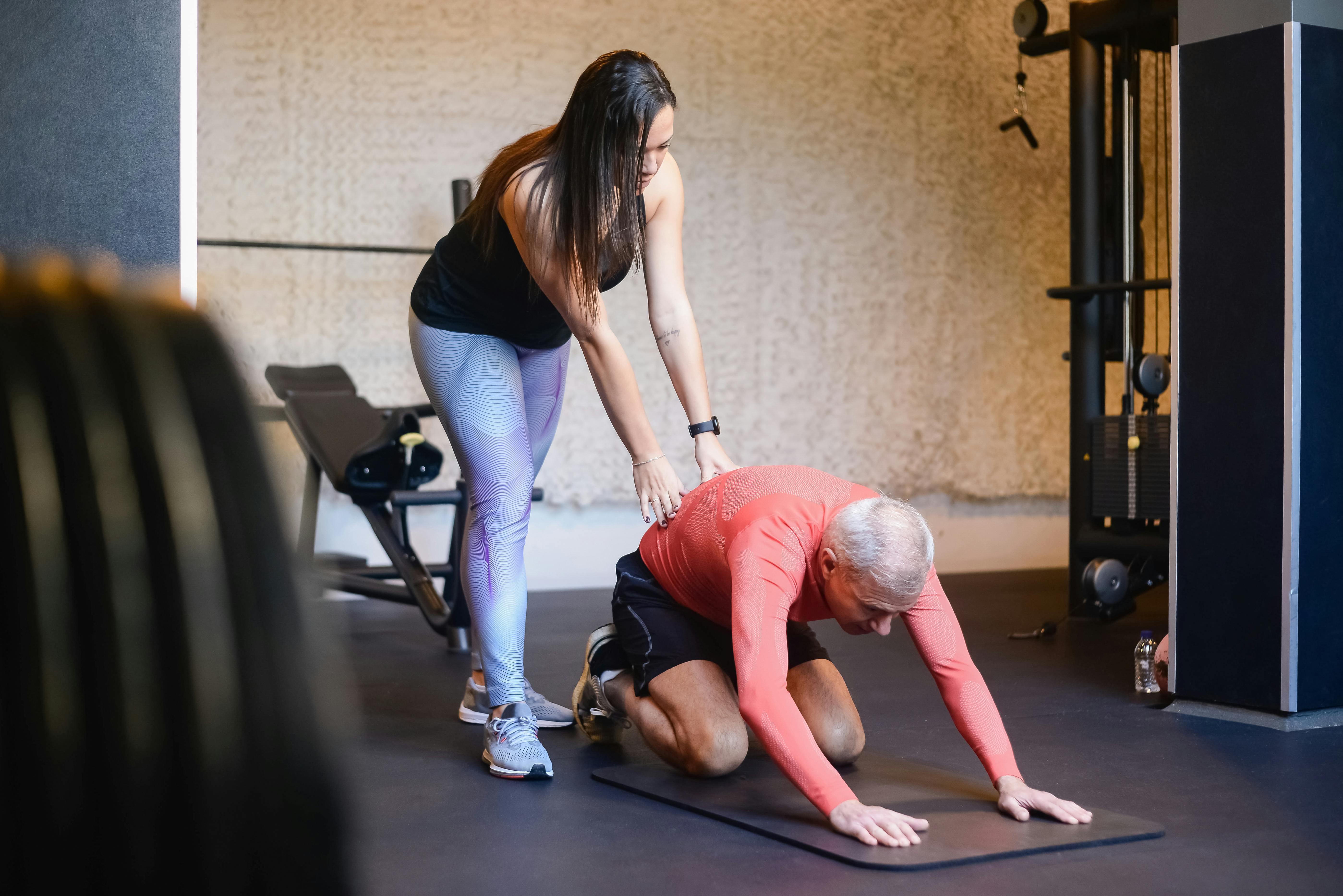
An accredited exercise physiologist is uniquely qualified to assess and address the physical contributors to fall risk. Unlike a general fitness program, an exercise physiology consultation begins with a thorough evaluation of strength, balance, coordination, gait, and functional capacity. This assessment forms the basis of a personalised and progressive fall prevention exercise program for the elderly that is designed around each individual's specific needs and goals.
Personalised and Progressive Programming
Research summarised in the Journal of Multidisciplinary Healthcare highlights that targeted exercise interventions can effectively reduce the incidence of falls and associated injuries in older adults when programs are evidence-based and individually tailored (An et al., 2025). An exercise physiologist monitors progress and adjusts the program accordingly, ensuring that training remains both safe and sufficiently challenging to drive continued improvement in strength and balance. To ensure your program is properly tailored and progressed, you can book a fall prevention assessment with an exercise physiologist.
What a Fall Prevention Exercise Program for the Elderly Might Include
While every program should be individualised, a well-designed fall prevention exercise program for the elderly commonly incorporates several core elements:
Standing balance exercises for seniors, including progressively challenging static and dynamic tasks
Balance and leg strengthening exercises for seniors targeting the hips, quadriceps, hamstrings, and calf muscles
Gait and coordination training to improve walking pattern and reactive stepping Functional movement exercises that replicate everyday activities
Flexibility and mobility work to support full range of movement
Education on fall risk factors, safe movement strategies, and home environment safety
Group-based programs can also be effective, offering social engagement alongside supervised exercise. For older adults with specific health conditions such as osteoporosis, neurological conditions, or post-surgical recovery, an exercise physiologist will adapt the program accordingly to ensure appropriateness and safety.
Exercise Physiology for Fall Prevention in Balmain
At Balmain Physiotherapy by Sydney Allied Health Group, our exercise physiologists work with older adults to reduce fall risk through evidence-based, individualised programs. Whether you are concerned about your own stability, have experienced a recent fall, or simply want to maintain your independence as you age, an assessment with our team is a practical first step.
Our multidisciplinary approach means that where needed, exercise physiology can be supported by physiotherapy, podiatry, or other services within the clinic. This integrated model allows us to address fall risk from multiple angles and develop a plan that reflects each person's health history and goals.


