

Painful Achilles Tendon Problems: Causes, Treatment and Exercise Tips

Updated: Jul 15
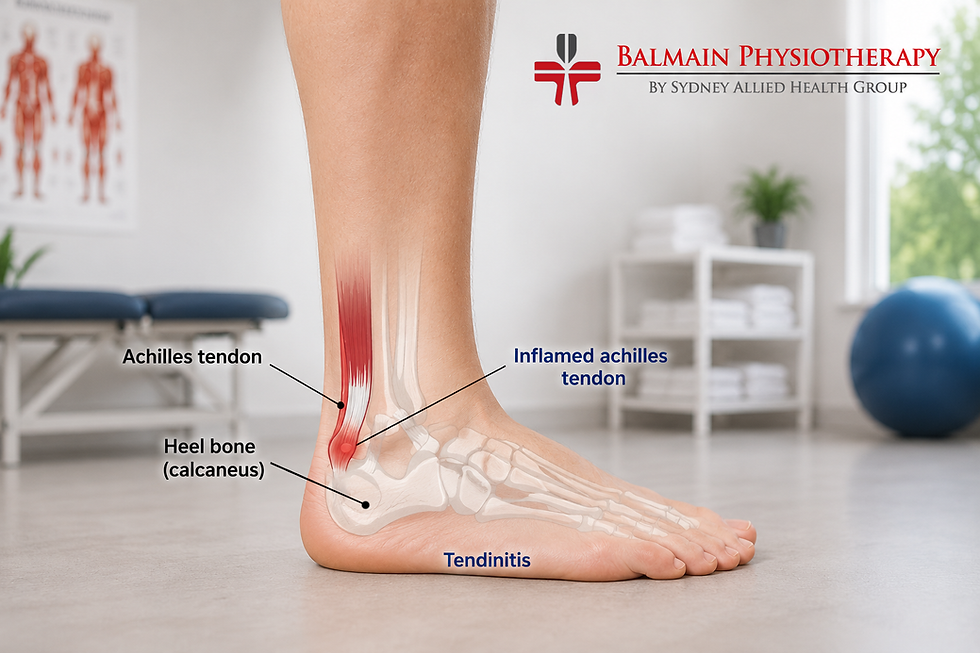
A painful Achilles can stop you in your tracks, whether you are an active runner, someone who stands for long periods, or simply going about your daily routine. The Achilles tendon is the thickest and strongest tendon in the body, connecting your calf muscles to your heel bone. Despite its strength, it is highly susceptible to overuse and injury. Understanding what causes Achilles tendon problems and how they are managed is an important first step toward recovery.
What Is the Achilles Tendon and Why Does It Get Injured?
The Achilles tendon bears significant load during everyday activities such as walking, climbing stairs, and standing on your toes. Over time, repetitive stress or a sudden increase in physical activity can cause the tendon to become irritated and inflamed, a condition known as Achilles tendinitis. If the condition is left unmanaged, the tendon tissue can begin to degenerate, progressing to a more chronic state called Achilles tendinopathy.
Research published in the Journal of Athletic Training (2020) identifies Achilles tendinopathy as a multifactorial condition, with both intrinsic and extrinsic risk factors contributing to decreased load tolerance in the tendon. Understanding these contributing factors is key to effective prevention and treatment.
Why Is My Achilles So Painful?
Achilles pain can range from mild stiffness after rest to sharp, debilitating discomfort during movement. Several factors can contribute to this pain, and identifying the right cause is essential for choosing the most appropriate management pathway. For individuals experiencing ongoing Achilles discomfort, professional assessment and tailored rehabilitation can make a significant difference in recovery and long-term mobility. Balmain Physiotherapy by Sydney Allied Health Group offers physiotherapy services through its Balmain Physiotherapy team, supporting patients with evidence-based treatment plans designed to address pain, improve strength, and help prevent recurring injuries. Early guidance from a qualified physiotherapist may also help individuals return to daily activities and exercise with greater confidence.
Overuse and Training Load Errors
A sudden increase in training volume or intensity is one of the most common triggers for an aching Achilles tendon. This includes increasing running mileage too quickly, adding hill training, or returning to exercise after a period of rest without adequate preparation. The tendon requires time to adapt to increased demands, and exceeding that threshold can lead to inflammation in the Achilles tendon.
Biomechanical and Physical Risk Factors
Tight Achilles tendons, reduced ankle mobility, and weaknesses in the calf or hip muscles can all increase the load placed on the tendon during movement. Abnormal foot posture, such as excessive pronation, can also alter how load is distributed through the lower limb. These physical factors do not necessarily cause pain on their own, but they can increase vulnerability over time, particularly when combined with high training demands.
Footwear and Surface
Wearing unsupportive footwear or training on hard surfaces can place additional stress on the Achilles. Transitioning to minimalist shoes or significantly changing your running surface without adequate preparation has also been associated with an increased risk of Achilles injury. Footwear choices are an often-overlooked but important factor in lower limb health.
Age, Health, and Other Contributing Factors
Achilles tendinopathy most commonly affects adults aged between 45 and 65, though it can occur at any age. Systemic conditions such as diabetes, as well as certain medications including fluoroquinolone antibiotics, have been linked to increased tendon vulnerability. Genetic predisposition and a family history of tendinopathy may also play a role in some individuals.
Why Does My Achilles Heel Hurt When I Walk?
Pain during walking is one of the hallmark symptoms of Achilles tendon problems. When the tendon is irritated or inflamed, the repetitive loading that occurs with every step places stress directly on the affected tissue. This is why many people notice that their Achilles pain is worst first thing in the morning or after prolonged rest, then briefly eases with light movement, only to return with sustained activity.
If walking consistently aggravates your Achilles, it is a sign that the tendon is struggling to manage the load being placed on it. Without appropriate management, this pattern can persist and worsen over time. A physiotherapy assessment can help identify the specific contributing factors and guide you toward a structured recovery plan.
Achilles Tendinitis Therapies and Treatment Options
Managing a painful Achilles generally involves a combination of load management, rehabilitation exercise, and supportive therapies. The goal is to reduce irritation while gradually restoring the tendon's capacity to handle everyday demands and physical activity.
Activity Modification and Load Management
Reducing or temporarily modifying activities that provoke symptoms is an important early step. Complete rest is generally not recommended, as the Achilles tendon responds best to controlled loading rather than prolonged inactivity. The aim is to find a level of activity that keeps you moving without continually aggravating the tendon.
Exercise-Based Rehabilitation
Exercises for Achilles tendonitis form the cornerstone of conservative management. Strengthening the calf and surrounding musculature through progressive loading helps to restore the tendon's load-bearing capacity. Eccentric loading exercises, which involve lengthening the muscle under tension, have a well-established evidence base in the management of Achilles tendinopathy. A physiotherapist or exercise physiologist can prescribe and progress these exercises safely based on your individual presentation.
Supportive Therapies
Depending on your symptoms and contributing factors, your treating clinician may recommend supportive therapies alongside exercise rehabilitation. These can include manual therapy to address tight Achilles tendons and surrounding soft tissue restrictions, footwear assessment, or the use of a heel raise to temporarily reduce load through the tendon. Ice applied to the area may also provide short-term comfort following activity.
General Exercise Tips for Painful Achilles Recovery
While a personalised program from a qualified clinician is always recommended, the following general principles are widely supported in the management of Achilles tendon conditions:
• Avoid sudden increases in training volume or intensity
• Warm up thoroughly before activity and allow adequate recovery time between sessions
• Wear supportive footwear appropriate for your activity
• Include calf strengthening as part of your regular training routine
• Address any lower limb stiffness or mobility restrictions with regular stretching
• Listen to your body and reduce activity if Achilles pain increases during or after exercise
Physiotherapy for Painful Achilles in Balmain
If you are dealing with an aching Achilles tendon that is affecting your daily life or activity levels, a physiotherapy assessment is the most effective place to start. A physiotherapist can identify the specific factors contributing to your Achilles pain, rule out more serious pathology, and develop a structured management plan tailored to your goals and activity requirements.
Balmain Physiotherapy by Sydney Allied Health Group offers evidence-based assessment and treatment for Achilles tendon problems, including Achilles tendinitis therapies, exercise rehabilitation, and load management strategies. The team works collaboratively to support your recovery and help you return to the activities you enjoy.
📅 Book a physiotherapy assessment with Balmain Physiotherapy by Sydney Allied Health Group and take the first step toward managing your painful Achilles.
References
Carcia, C. R., Martin, R. L., Houck, J., & Wukich, D. K. (2010). Achilles Pain, Stiffness, and Muscle Power Deficits: Achilles Tendinitis. Journal of Orthopaedic and Sports Physical Therapy, 40(9), A1-A26. https://pmc.ncbi.nlm.nih.gov/articles/PMC7249277/
Maffulli, N., Longo, U. G., & Denaro, V. (2010). Novel Approaches for the Management of Tendinopathy. Journal of Bone and Joint Surgery, 92(15), 2604-2613. https://pmc.ncbi.nlm.nih.gov/articles/PMC3134723/


